

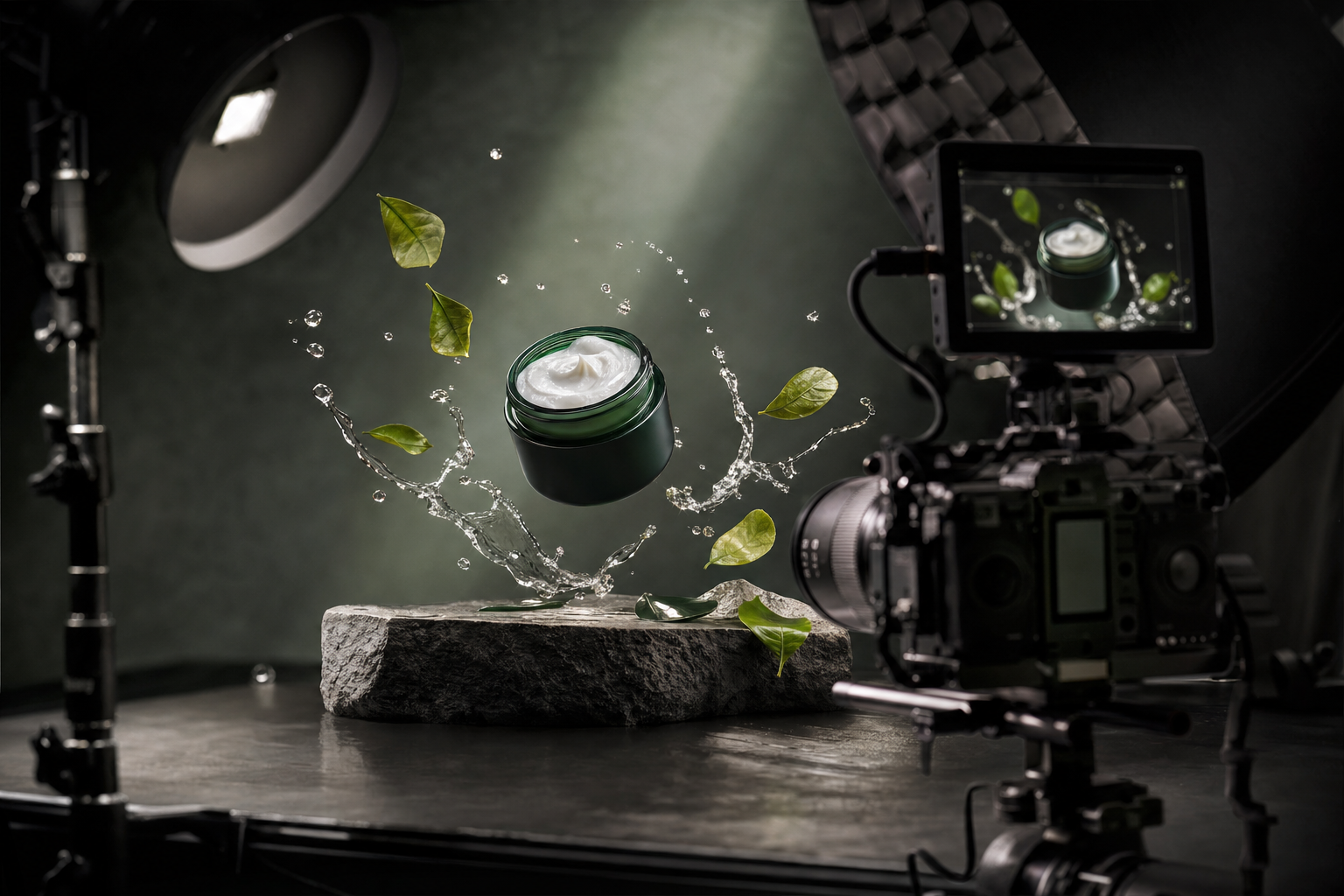
The average person scrolls past 300 feet of content every day. That’s taller than the Statue of Liberty. Your product video has roughly 2.3 seconds to stop that scroll, capture attention, and communicate value before the thumb keeps moving. This brutal reality means promotional videos can’t just be good anymore. They need to be magnetic, purposeful, and built with a strategy that goes far beyond hitting record. Whether you’re launching a new product or reinvigorating an existing one, the difference between a video that drives sales and one that disappears into the digital void comes down to understanding how visual storytelling intersects with consumer psychology. The brands winning attention in 2026 aren’t necessarily spending more on production. They’re thinking differently about what a promotional video actually needs to accomplish.
Understanding What Makes a Promotional Video Actually Work
Before you think about cameras, lighting, or editing software, you need to get ruthlessly clear on what your video exists to do. A promotional video isn’t a documentary about your product’s features. It’s not a spec sheet with background music. It’s a piece of persuasive visual communication designed to move someone from curiosity to action.
The most effective product videos answer three questions in the first ten seconds: What is this? Why should I care? What happens next? Everything else is decoration. When we work with brands at Roopol Studio, we start every project by identifying the single most compelling reason someone would choose this product over doing nothing at all. Not over a competitor. Over inertia.
Think about the last product video that made you stop scrolling. What grabbed you? Chances are it wasn’t a list of specifications. It was a problem you recognized, a transformation you wanted, or an emotion you connected with instantly. That’s the foundation you’re building on.
Your video needs a clear objective. Are you building brand awareness? Driving direct sales? Explaining a complex product? Launching something new? Each goal requires a different approach to pacing, messaging, and call to action. A 15-second Instagram Reel for brand awareness looks nothing like a 90-second product explainer for your website.
Pre-Production: Where Great Videos Are Actually Made
The biggest mistake brands make is treating pre-production like a formality. This is where your video succeeds or fails. Great footage can’t save a weak concept, but a strong concept can work even with modest production value.
Start with your audience. Who are they specifically? Not demographics. Psychographics. What do they care about at 11pm when they can’t sleep? What frustrates them about existing solutions? What language do they use when talking about their problems? If you’re promoting a meal prep container, your audience isn’t just ‘busy professionals.’ It’s someone who feels guilty about ordering takeout again, who wants to eat healthier but can’t face another hour of weekend meal prep, who’s tired of containers that leak in their bag.
Write a creative brief that includes:
- The core message in one sentence
- The emotional response you want to create
- The specific action viewers should take after watching
- Three visual moments that will define the video
- The platforms where this will live and their technical requirements
Storyboarding doesn’t require artistic skill. Stick figures work. What matters is visualizing the flow of your video shot by shot. Where does the eye go? When do you reveal the product? When does the pace shift? A 60-second video typically needs 8-12 distinct shots to feel dynamic without being chaotic.
Location scouting matters more than you think. Natural light changes everything. Background noise can ruin audio. If you’re filming a kitchen product, a cluttered counter communicates something very different than a minimalist setup with one perfect accent. Every element in frame is either adding to your message or distracting from it.
Production Strategies That Separate Amateur From Professional
You don’t need a Hollywood budget, but you do need to understand what production choices communicate quality. Shaky handheld footage can work for authentic behind-the-scenes content. It destroys credibility for a luxury product launch.
Lighting is the difference between footage that looks flat and lifeless versus dimensional and engaging. Natural light is free and gorgeous, but you need to understand how to work with it. Golden hour (the hour after sunrise and before sunset) gives you that warm, flattering glow everyone wants. Overcast days provide soft, even lighting that’s incredibly forgiving. Harsh midday sun creates unflattering shadows and squinting.
If you’re shooting indoors, position your subject near a large window and use the natural light as your key light. A white poster board opposite the window bounces light back and fills in shadows. This simple setup rivals expensive lighting kits for many applications.
Camera movement should be intentional. A slow push-in creates intimacy and draws focus. A pull-out reveals context. Panning across product details lets viewers absorb features. Random movement just makes people seasick. If you’re shooting handheld, move your whole body, not just your arms. Better yet, use a tripod, gimbal, or slider for controlled movement.
Audio quality matters more than most brands realize. Viewers will tolerate imperfect visuals but immediately click away from bad audio. If you’re including voiceover or dialogue, record in a quiet space. Use a lavalier mic for interviews, a shotgun mic for directional audio, or record voiceover separately in post-production where you can control the environment completely.
Product shots require special attention. Shoot your product from multiple angles. Get macro shots of textures and details. Show it in context being used by real hands. Demonstrate scale by including recognizable objects in frame. Movement makes products more interesting: pouring liquid, unboxing, rotating on a turntable.
For brands in Toronto and across the GTA, working with a studio like Roopol Studio that specializes in video production means you get the benefit of professional equipment and expertise without needing to become a cinematographer yourself. Sometimes the smartest production strategy is knowing when to bring in specialists who do this every day.
Editing: Where Your Story Finally Takes Shape
Editing is writing with images. This is where you discover what your video is actually about. Your raw footage contains the potential. Editing reveals the final piece.
Start by watching all your footage without touching the timeline. Make notes about the strongest moments. You’re looking for genuine reactions, perfect lighting, moments where everything aligned. Build your edit around these anchor shots.
Pacing determines how your video feels. Quick cuts create energy and excitement. Longer holds create space for emotion and contemplation. Most promotional videos benefit from starting with energy to grab attention, settling into a rhythm in the middle for information, and building to a energetic close that drives action.
The first three seconds are sacred. Don’t waste them on logos or slow fades. Start with your most visually arresting shot. Start with motion. Start with a question that creates curiosity. Netflix doesn’t put their logo at the beginning of shows anymore because they learned people make stay-or-leave decisions in seconds.
Music choice shapes emotional response more than any other single element. Upbeat corporate ukulele says something specific (usually ‘we’re trying too hard to seem friendly’). Moody electronic textures create modern sophistication. No music at all with just natural sound can feel authentic and immediate. Choose music that matches both your brand personality and the emotion you want viewers to feel.
Text overlays and graphics should enhance, not replace, your visual storytelling. Use them to emphasize key points, display pricing, or highlight features that aren’t visually obvious. Keep typography consistent with your brand. Animations should be smooth and purposeful, not distracting.
Color grading is the final polish that makes footage feel cohesive and intentional. You’re not trying to make footage look unnatural. You’re enhancing what’s already there and creating consistency across shots that might have been filmed in different lighting conditions. Warm tones feel inviting. Cool tones feel modern and clean. High contrast feels dramatic. Low contrast feels soft and dreamy.
Optimizing for Different Platforms and Audiences
Creating one video and posting it everywhere is leaving money on the table. Every platform has different technical specs, audience behaviors, and algorithmic preferences. Your video needs to be adapted, not just uploaded.
Instagram favors vertical video (9:16) for Reels and Stories. The algorithm prioritizes watch time and completion rate, so videos need to hook immediately and maintain momentum. Captions are crucial because most people watch without sound initially. The sweet spot is 15-30 seconds for maximum reach, though up to 90 seconds can work if genuinely engaging.
YouTube rewards longer content that keeps viewers on the platform. A 2-3 minute product video can perform well if it provides value throughout. The first 30 seconds determine whether viewers stay or leave. Use custom thumbnails that look compelling even at small sizes. Include keywords in your title and description for search visibility.
TikTok’s audience expects authenticity over polish. Videos that feel too produced can actually underperform compared to raw, genuine content. The platform loves trends, sounds, and videos that feel like they were made by a person, not a brand. That doesn’t mean quality doesn’t matter. It means perfection isn’t the goal.
LinkedIn requires a different tone entirely. Professional without being boring. Informative without being dry. Videos that show the story behind the product, the team that built it, or the problem it solves for businesses tend to perform better than pure sales pitches.
Your website is where longer, more detailed product videos live. This is the place for the full story. Viewers who make it to your product page are already interested. Give them everything they need to make a decision: features, benefits, social proof, demonstrations.
Create multiple cuts from the same source material. A 90-second hero video for your website can be cut down to 30 seconds for Instagram, 15 seconds for a teaser, and reformatted vertical for Stories. Our approach to social media content creation always includes planning for multiple formats during the shoot itself, not just in editing.
Distribution Strategy: Making Sure People Actually See Your Video
Creating a brilliant promotional video that sits on your hard drive helps nobody. Distribution requires as much strategy as production.
Organic reach is increasingly challenging. Every platform wants you to pay for visibility. But organic posting still builds credibility and provides content for your existing audience. Post consistently. Use relevant hashtags strategically (3-5 targeted hashtags perform better than 30 generic ones). Tag locations if you’re a local business serving Toronto or specific areas. Engage with comments quickly to signal to algorithms that your content sparks conversation.
Paid promotion lets you target exactly who sees your video. Facebook and Instagram ads let you define audiences by demographics, interests, behaviors, and even retarget people who visited your website. Start with small budgets and test different audiences, placements, and messages. A video that performs well organically doesn’t always succeed as an ad, and vice versa.
Email marketing remains one of the highest-converting channels. Embed your promotional video in product launch emails, newsletters, and automated sequences. Just putting the word ‘video’ in your subject line can increase open rates. Video in email can increase click-through rates by over 200%.
Your product pages need video. Shopify reports that products with video have higher conversion rates than those with only images. Place your video prominently, ideally as the first piece of content visitors see. Auto-play (muted) can work on desktop but should be used carefully on mobile to respect data usage.
Collaborate with creators and influencers who align with your brand values. Provide them with your product and your promotional video assets. Their authentic integration of your product into their content reaches audiences who trust their recommendations more than branded content.
Track everything. Views matter less than watch time. Completion rate tells you if your video holds attention. Click-through rate shows if your call to action works. Conversion rate reveals if viewers become customers. Use UTM parameters to track which specific video placements drive sales.
Common Mistakes That Kill Otherwise Good Product Videos
Learning what not to do saves as much time as learning best practices. These mistakes show up constantly and immediately reduce video effectiveness.
Waiting too long to show the product. If viewers don’t see what you’re promoting in the first 5 seconds, you’ve lost most of them. Tease it, show it in use, or reveal it dramatically, but don’t make people wait through your logo animation and brand manifesto.
Talking about features instead of benefits. Nobody cares that your blender has a 1200-watt motor. They care that it pulverizes frozen fruit into smooth texture in seconds so they can make healthy smoothies without chunks. Features are what it has. Benefits are what it does for them.
Weak or missing calls to action. Don’t assume viewers will figure out what to do next. Tell them explicitly. ‘Shop now.’ ‘Learn more.’ ‘Book a consultation.’ Make it obvious and easy.
Ignoring mobile viewing. Over 75% of video views happen on mobile devices. If your text is too small, your product details too fine, or your pacing too slow, mobile viewers will leave. Always preview your edit on a phone before finalizing.
Inconsistent branding. Your promotional video should feel like it comes from the same brand as your website, packaging, and social presence. Colors, fonts, tone, and style should be recognizable immediately.
Overly long videos that say too little. Respect your viewer’s time. Every second should serve a purpose. If you can communicate your message in 30 seconds, don’t stretch it to 60 just because you shot extra footage.
Poor audio mixing. Background music that drowns out voiceover. Jarring volume changes between shots. Audio that peaks and distorts. These technical issues make even beautiful footage feel amateur.
Forgetting accessibility. Add captions always, not just for viewers who watch muted. Captions make your content accessible to deaf and hard-of-hearing viewers, help non-native speakers, and improve comprehension for everyone. Describe key visual elements in voiceover when possible.
When to DIY and When to Hire Professionals
Budget constraints are real. Not every video needs a full production team. But understanding when professional help multiplies your ROI versus when scrappy works helps you allocate resources wisely.
DIY makes sense for: regular social content that values authenticity over polish, behind-the-scenes videos, quick product demos, testimonial captures, and content where your audience expects and appreciates the personal touch. A smartphone with good natural light and a simple editing app can create perfectly effective content for many applications.
Professional production becomes valuable for: product launches where first impressions matter enormously, hero videos that will live on your homepage for months, content representing premium or luxury products, complex products that require sophisticated demonstration, and videos where you’re competing directly against well-funded competitors. The quality differential becomes the brand differential.
Consider the lifetime value of the video. A promotional video for a limited product drop might not justify significant investment. A cornerstone piece that represents your brand and will be used across all channels for a year or more? That deserves proper production budget.
At Roopol Studio, we work with brands at different stages and budgets. Sometimes that means a full production with concept development, multi-camera shoots, and extensive post-production. Sometimes it means providing direction and equipment for a hybrid approach where the brand handles some elements and we handle the specialized pieces. The right solution depends on your specific product, audience, and goals. Our content packages are designed to give brands comprehensive visual assets that work across multiple channels without requiring separate production days for each need.
Think about professional production as buying back time and expertise. Yes, you could spend months learning color grading, motion graphics, and audio mixing. Or you could have those skills applied to your project while you focus on the business strategy only you can execute.
Measuring Success and Iterating
Your first promotional video probably won’t be your best. Success comes from testing, measuring, learning, and improving. Build this feedback loop into your process.
Define success metrics before you publish. What does a successful video look like quantitatively? Is it 10,000 views? A 40% completion rate? 50 conversions? Knowing your target lets you measure performance objectively rather than relying on feelings.
Platform analytics tell different stories. YouTube Analytics shows exactly where viewers drop off, which helps you identify weak moments in your edit. Instagram Insights reveals what time your audience is most active. Facebook shows demographic breakdowns of who engaged most. Shopify or your website analytics connect video views to actual purchases.
A/B test different versions when possible. Create two cuts with different opening hooks and see which retains viewers better. Try different thumbnails. Test different calls to action. Small changes can create significant performance differences.
Gather qualitative feedback too. What are people saying in comments? What questions come up repeatedly? If you’re running ads, what objections appear? This feedback reveals what your video communicated well and what might need clarification.
Use successful videos as templates for future content. If a particular style, pacing, or approach resonated, that’s your signal to create more in that direction. Your audience is telling you what works. Listen.
Update and refresh promotional videos periodically. Products evolve. Trends change. A video that performed beautifully in 2024 might feel dated by 2026. Plan for video content to have a shelf life and budget for refreshes accordingly.
Frequently Asked Questions
How long should a promotional video be?
The ideal length depends entirely on platform and purpose. For social media, 15-30 seconds performs best for awareness content, while 30-60 seconds works for product explanations. Website hero videos can extend to 90 seconds if they maintain engagement throughout. The real answer is: as long as it needs to be to communicate your core message effectively, and not one second longer. Every moment should earn its place. Test different lengths and let completion rates guide you.
What equipment do I need to create a professional-looking product video?
You can create effective promotional videos with a modern smartphone, good natural lighting, and a simple tripod. That covers probably 70% of use cases. As you scale, consider investing in an external microphone for better audio quality, a gimbal for smooth movement shots, and basic lighting equipment for consistent indoor shoots. Professional cameras and lenses become valuable when you need specific capabilities like shallow depth of field, low-light performance, or high-resolution slow motion. Start with what you have and upgrade based on specific limitations you encounter.
Should I include pricing in my promotional video?
This depends on your product and strategy. Include pricing when it’s a competitive advantage, when you’re targeting direct-response sales, or when transparency is part of your brand positioning. Exclude pricing when it requires explanation or customization, when you want to drive conversations rather than immediate purchases, or when price might create objections before you’ve fully communicated value. For products under $100 with simple pricing, including it often increases conversion. For complex B2B solutions or premium products, building value first typically works better.
How much should I budget for a promotional video?
Promotional video costs range from $0 for fully DIY smartphone content to $50,000+ for high-end commercial productions with actors, locations, and extensive post-production. Most small to medium businesses find effective results in the $2,000-$8,000 range, which typically includes concept development, a shoot day with professional equipment, and editing. The right budget depends on how central video is to your marketing strategy, your product’s price point, and your competitive landscape. A $50 product rarely justifies a $20,000 video. A product with $100,000 annual revenue potential might find a $5,000 investment returns itself many times over.
Can I use stock footage in my promotional video?
Stock footage can supplement original content but shouldn’t replace it entirely. Use stock for establishing shots, abstract concepts, or situations impractical to film yourself. Your actual product, your team, your customers, and your unique brand story need original footage. Videos that rely too heavily on stock footage feel generic and fail to differentiate your brand. If you’re using stock, choose carefully to match your color palette and visual style, and integrate it seamlessly with original content rather than making it obvious where stock begins and ends.
The gap between brands that create forgettable promotional videos and those that create content people actually want to watch isn’t budget. It’s intention. When you approach video as strategic visual communication rather than a checkbox on your marketing list, everything changes. Your product has a story worth telling. The question is whether you’re telling it in a way that makes people stop, watch, and take action.
If you’re ready to create promotional video content that actually moves the needle for your business, we’d love to explore what’s possible together. At Roopol Studio, we’ve helped brands across Toronto and the GTA transform their visual presence with photography and video that doesn’t just look good, but works hard. Book a free consultation and let’s talk about your product, your audience, and the kind of video content that will help you stand out in an impossibly crowded digital landscape. Check out our portfolio to see how we’ve approached visual storytelling for brands like yours.