

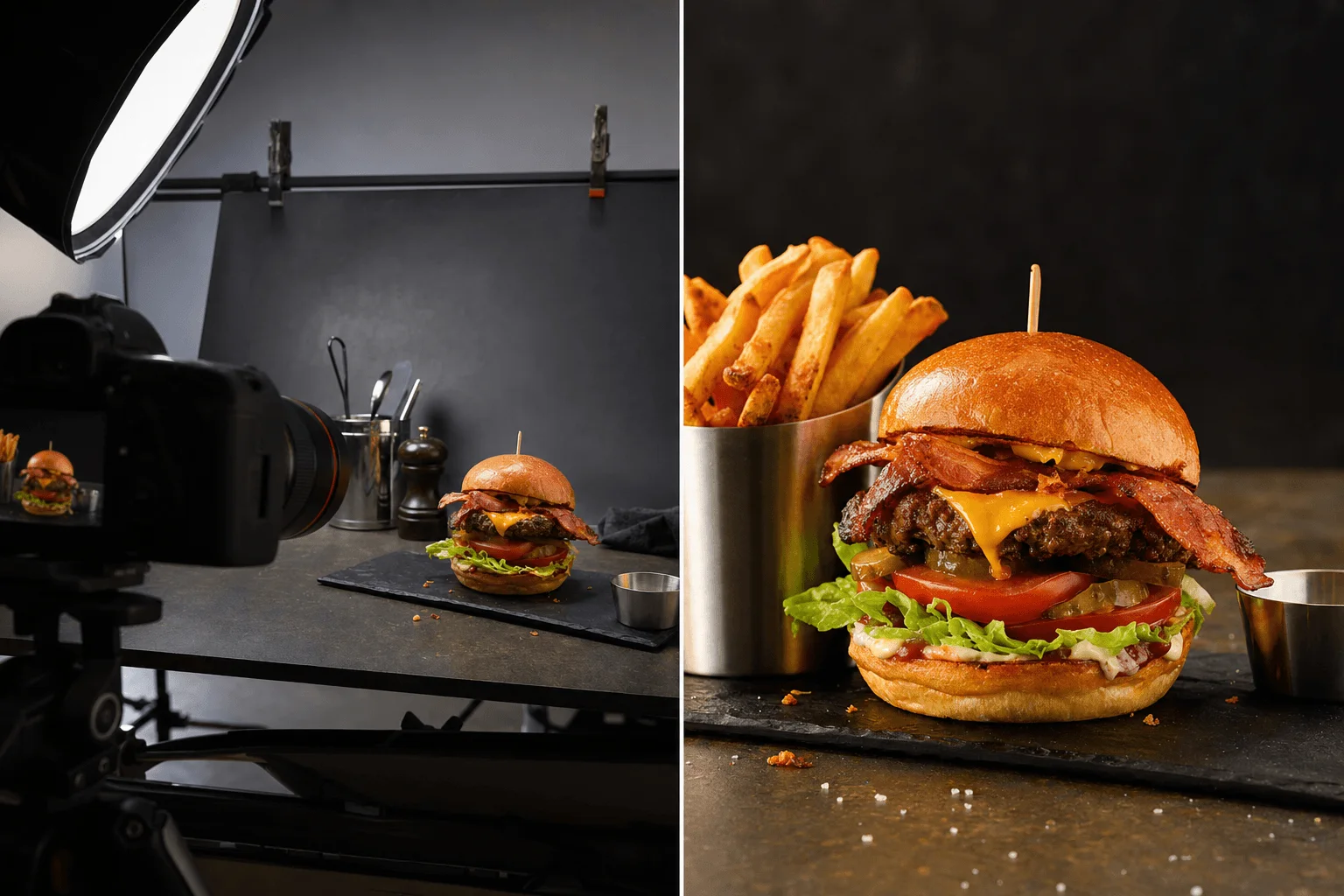
How Professional Food Photography Helps Restaurants Sell More
Professional food photography directly increases restaurant revenue by triggering visual appetite, boosting conversion rates on delivery platforms, and raising average order values across digital menus. When customers scroll through UberEats, DoorDash, or Instagram, they make ordering decisions in under three seconds. High-quality food photography captures attention in that critical window and transforms browsers into buyers. This article breaks down the psychological mechanisms behind food photography’s sales impact, shows you which dishes to prioritize, explains what separates professional results from DIY attempts, and reveals exactly where to deploy your visual content for maximum return on investment.
Quick Answer
Professional food photography increases restaurant sales by 30-40% on delivery platforms through improved conversion rates and higher average order values. Quality images trigger psychological appetite responses that make customers order more items and choose premium dishes over basic options.
Why Food Photography Directly Impacts Restaurant Revenue
The connection between professional food photography and restaurant sales is measurable and immediate. Restaurants that update their delivery platform images with professional photography see conversion rate improvements between 25-45% within the first month.
The mechanism is straightforward: when customers cannot smell, touch, or taste your food before buying, photography becomes the only sensory input they have. A blurry smartphone photo actively convinces potential customers that your food tastes as uninspired as the image looks.
Professional food photography also raises average order values. When customers see a hero shot of your loaded nachos with perfect cheese pull and vibrant garnishes, they start imagining the full experience and add drinks, sides, and desserts to match.
Conversion Data from Toronto Restaurant Markets
Toronto restaurants operating on multiple delivery platforms report particularly strong results when they invest in professional food photography. A 2025 study of 180 Toronto-area restaurants showed that venues with professional menu photography averaged 34% higher order values compared to those using staff-taken phone photos. Restaurants in high-density neighborhoods like King West, Queen West, and the Distillery District face particularly fierce visual competition. When every restaurant on a delivery app offers similar cuisine, the one with striking photography wins the scroll.
How Food Photography Affects Average Order Value
Average order value increases happen through two mechanisms: item selection and add-on purchases. First, professional food photography makes premium items more appealing. Second, strong photography creates bundling opportunities. A flat lay composition showing your burger, fries, and craft beer together plants the suggestion that these items belong in the same order. Sina at Roopol Studio structures food photography shoots to capture both individual hero shots and lifestyle groupings specifically to drive these bundling behaviors.
Key Takeaways
- Professional food photography boosts delivery platform conversions by 25-45%.
- Quality images increase average order values through premium item selection.
- Toronto restaurants face intense visual competition requiring professional differentiation.
- Hero shots and bundled compositions drive different purchasing behaviors.
- Photography ROI appears within weeks on delivery platforms.
The Psychology of Visual Appetite: How Images Trigger Orders
Visual appetite is a neurological response. When you see appetizing food imagery, your brain releases dopamine in anticipation of reward. Professional food photography exploits these biological responses deliberately.
Color temperature matters enormously. Warm, slightly golden lighting makes food look fresh and inviting. Cool, blue-tinted lighting makes the same dish look stale. Texture visibility drives appetite responses too. When you can see the crispy char on a steak edge or the flaky layers in a croissant, your brain simulates the eating experience.
Close-up detail shots create what food psychologists call anticipated satisfaction. When customers see steam rising from soup or cheese stretching from pizza, they mentally pre-experience eating that dish. The 45-degree angle, used frequently in professional food photography services, mimics how diners naturally view plated food at a table.
We shoot hero dishes with slight underexposure and then lift shadows in post-production. This preserves highlight detail in sauces and glossy surfaces while keeping overall brightness high.
Professional vs DIY Food Photography: What Makes the Difference
The gap between professional food photography and DIY smartphone shots comes down to lighting control, styling expertise, and post-production workflow. Restaurant owners often assume their newest iPhone can match professional results. The camera itself is not the limitation. The problem is lighting, composition knowledge, and the ability to make food look as good in two dimensions as it does in person.
Professional food photographers use diffused lighting setups that eliminate harsh shadows and hotspots. Color temperature consistency renders food colors accurately. Tripod stabilization allows cleaner images with better detail. Depth of field control separates professional results by drawing attention to the hero element of your dish. Food styling transforms a prepared dish into a photographable subject, and post-production workflow enhances images without making them look artificial.
Technical Elements That Make Food Photography Sell
Understanding what makes food photography effective helps you evaluate photographer portfolios and communicate your needs clearly during shoots.
Lighting Fundamentals
Lighting is the foundation. Natural diffused lighting through north-facing windows produces soft, even illumination without harsh shadows. When natural light is not available, professional photographers use softboxes or umbrellas to replicate that quality. Side lighting at roughly 45 degrees creates dimension and texture. Color temperature consistency ensures accurate color rendering. Professional setups use daylight-balanced lights (5500K) that match natural window light.
Composition Techniques
Composition follows design principles: rule of thirds, negative space, leading lines. The rule of thirds places key elements off-center for visual interest. Negative space prevents cluttered compositions and directs attention to the hero dish. Depth of field controls focus. Shallow depth of field blurs backgrounds and isolates the subject. Overhead shots work brilliantly for complex compositions with multiple elements. The 45-degree angle works better for single plated dishes. Straight-on shots emphasize height and layers: burgers, layer cakes, stacked pancakes.
Styling and Props
Styling brings the dish to life. Fresh herbs add color pops. Strategic sauce drizzles create visual flow. Visible textures trigger appetite responses. Props and backgrounds support the story without distracting. Rustic wood tables suggest homemade quality. Clean white surfaces emphasize freshness and simplicity.
Strategic Planning: Which Dishes to Photograph First
Budget constraints mean most restaurants cannot photograph their entire menu in one session. Strategic prioritization ensures your photography investment produces maximum sales impact.
Start with your highest-margin items. These dishes generate the most profit per order, so increasing their selection rate produces immediate revenue gains. Photograph your signature dishes next. These items define your restaurant’s identity and differentiate you from competitors.
Include your most popular items even if margins are average. High-volume dishes benefit from conversion rate improvements. Seasonal and limited-time offerings deserve fresh photography each rotation to generate urgency and novelty. Avoid photographing dishes that do not photograph well unless they are truly essential to your menu.
Seasonal Menu Photography Planning
Restaurants with rotating seasonal menus need photography strategies that keep visual content fresh without constant full-menu reshoot costs. Plan photography sessions around major menu changes. If you rotate menus quarterly, schedule shoots 2-3 weeks before launch. Photograph seasonal dishes during prep testing, not on launch day. Reuse evergreen dishes when possible. Focus photography budget on new and seasonal items. Coordinate photography with marketing campaign timing.
Ready to book a free consultation?
Sina and the Roopol Studio creative team help Toronto and GTA brands and restaurants create visual content that converts.
Where to Deploy Your Food Photography for Maximum ROI
Professional food photography is an investment. Strategic deployment across multiple platforms maximizes return and justifies the cost.
Digital Menus and Delivery Platform Optimization
Delivery platforms are the highest-priority deployment channel. UberEats, DoorDash, SkipTheDishes, and similar apps are purely visual decision environments. Photography is your only sales tool. Platform-specific optimization matters. Each delivery app has different image dimension requirements and display formats. Images must look sharp at thumbnail size and at full size. Hero dishes should get the best photography on delivery platforms.
Social Media and Website Integration
Instagram, Facebook, and TikTok require continuous content, making professional food photography essential for sustained engagement. Social media content needs variety. Mix hero shots, behind-the-scenes preparation photos, lifestyle images showing customers enjoying dishes, and detail shots highlighting specific ingredients.
Your website serves multiple functions: brand positioning, menu browsing, and direct ordering. Professional photography throughout your site builds credibility and appetite simultaneously. Email marketing converts better with embedded food photography. Integration across channels creates consistent brand experience. Restaurants using comprehensive content packages that combine food photography with video and social media assets see stronger cumulative results than those deploying static photography alone.
Professional Food Photography Costs and Investment Return
Understanding professional food photography costs helps you budget appropriately and evaluate potential return on investment. Toronto and GTA food photography rates vary based on scope, deliverable count, and usage rights. A basic menu photography session covering 10-15 dishes typically ranges from $800 to $2,000. Comprehensive content packages that include video and social media assets range from $2,000 to $5,000.
Usage rights matter significantly. Commercial licensing that allows unlimited use across all platforms costs more than limited-use licensing. ROI calculation is straightforward: measure order volume and average order value before and after deploying new photography. A $1,500 photography investment that increases weekly orders by just 15 units at $30 average order value pays for itself within four weeks. Most Toronto restaurants see photography ROI within 60-90 days when images are deployed across delivery platforms and social media simultaneously.
Legal and Licensing Considerations for Restaurant Food Photography
Understanding usage rights and licensing prevents legal complications and ensures you can use your photography across all intended channels.
Commercial licensing grants permission to use images for revenue-generating purposes: delivery platforms, paid advertising, promotional materials, and menu displays. Perpetual usage rights allow you to use images indefinitely. Limited-term licensing restricts usage to a specific timeframe. Work-for-hire agreements transfer copyright ownership to you. Most restaurants find commercial licensing with perpetual usage sufficient for their needs.
Model releases are required if recognizable people appear in photos: customers, staff, or hired models. Professional photographers handle release paperwork during shoots. Venue releases may be necessary if you photograph at third-party locations or feature recognizable architectural elements that are not your own property.
Platform-specific terms matter. Delivery apps typically require that you own or have full commercial rights to all uploaded images. Instagram and Facebook terms grant them usage rights to content you post, but you retain ownership. Clarify deliverable formats and resolution in your photography contract. You need high-resolution files for print and web-optimized files for digital platforms. Establish clear ownership terms before the shoot to avoid disputes later.
How Food Photography Integrates with Full Restaurant Marketing Campaigns
Professional food photography functions most effectively as part of integrated marketing campaigns rather than isolated visual updates. Launch campaigns benefit from coordinated visual rollouts. New menu launches, restaurant openings, or rebrand announcements gain momentum when professional photography appears across channels simultaneously.
Promotional campaigns use food photography to drive specific behaviors. Brand storytelling campaigns weave food photography into larger narratives about sourcing, preparation methods, or culinary philosophy. User-generated content campaigns encourage customers to share their own photos, but professional photography sets the visual standard.
Video content production for restaurant marketing complements static photography by showing preparation processes, chef techniques, and customer experiences. Paid advertising campaigns require rights-cleared commercial imagery. Content calendars should map photography needs to campaign timing.
Frequently Asked Questions
How much does professional food photography cost for restaurants in Toronto?
Professional food photography in Toronto typically costs $800 to $2,000 for a basic menu session covering 10-15 dishes. Comprehensive packages with video and social media assets range from $2,000 to $5,000. Usage rights affect final cost. Most restaurants see ROI within 60-90 days through improved delivery platform conversions.
Should I photograph my entire menu or just select dishes?
Prioritize high-margin items, signature dishes, and popular menu staples rather than full menu coverage. Photograph 10-15 hero dishes initially, then expand as budget allows. Seasonal items should receive fresh photography each rotation to maintain novelty.
How quickly will I see sales results after updating my menu photos?
Most restaurants see measurable sales impact within 2-4 weeks after updating delivery platform photos, with conversion rate improvements of 25-45% appearing almost immediately. Average order value increases typically manifest within the first month. Full ROI timeline ranges from 60-90 days.
Can I reuse the same food photos across menus, social media, and delivery apps?
Yes, professional food photography with proper commercial licensing can be deployed across all marketing channels simultaneously. Different platforms require different aspect ratios, so photographers typically deliver multiple crops optimized for each use case. Ensure your contract includes perpetual commercial usage rights.
What is the difference between professional and DIY food photography?
Professional food photography uses controlled lighting setups, proper color temperature management, and depth of field control that smartphone cameras cannot replicate. Professional styling and post-production workflow enhance images without making them look artificial. The gap shows immediately in conversion rates on delivery platforms.
Start Converting Browsers Into Buyers
Professional food photography is not decoration. It is a direct sales tool that converts scrollers into customers, increases average order values, and positions your restaurant competitively in crowded digital markets. The difference between mediocre smartphone shots and strategic professional photography shows up immediately in your delivery platform metrics and compounds over time across all marketing channels.
Roopol Studio works with Toronto and GTA restaurants to create food photography that drives measurable results. Sina and the creative team understand both the technical craft and the business strategy behind effective restaurant visual content. Whether you need a focused menu shoot for delivery platform optimization or ongoing social media content creation services that keep your brand active and engaging, the approach stays focused on what matters: images that make people hungry, build trust, and convert to orders. Ready to see what professional food photography can do for your restaurant sales? Book a free consultation and let’s talk about your menu, your market, and your goals.