

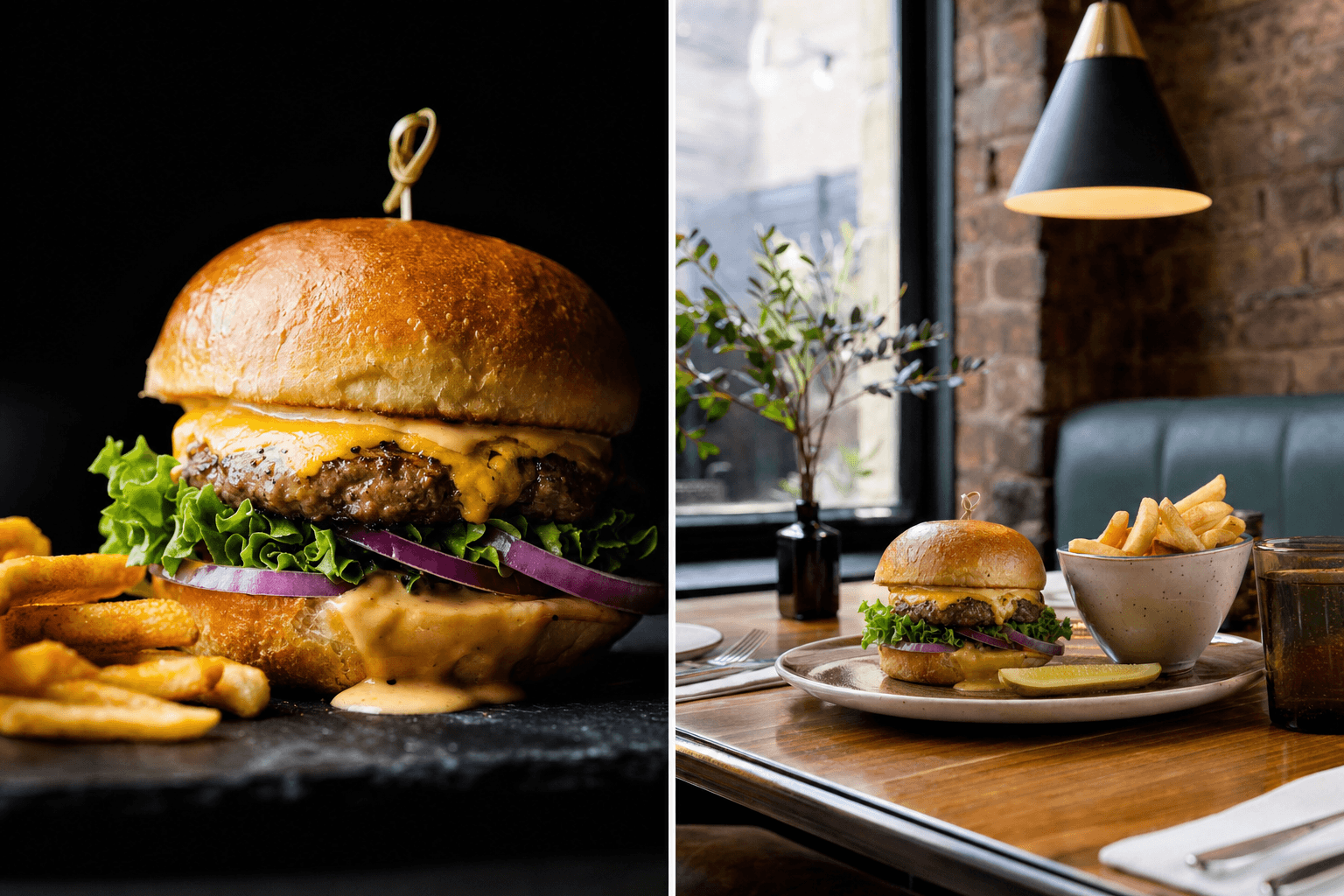
Food photography vs restaurant photography: what’s the difference? If you’re a restaurant owner or brand manager in Toronto or the GTA, this question matters more than you might think. The service you choose affects everything from your menu design to your social media presence, and choosing the wrong one can mean wasted budget on images that don’t serve your business goals. This article breaks down the distinct characteristics of each photography service, when to use which approach, what each costs, and how to prepare for a shoot that maximizes your investment.
Quick Answer
Food photography focuses on isolated product shots of dishes with controlled styling and lighting, while restaurant photography captures the complete dining experience including ambiance, interiors, people, and in-situ food presentations for brand storytelling and marketing.
Key Takeaways
- Understand food photography creates isolated product shots for menus and ordering.
- Recognize restaurant photography captures brand story, ambiance, and dining experience.
- Identify which deliverables you need before requesting quotes or booking shoots.
- Prepare food styling, venue readiness, and shot lists to maximize session value.
- Budget appropriately as restaurant photography typically costs more due to broader scope.
What Is Food Photography? Definition and Core Characteristics
Food photography isolates individual dishes as hero subjects. The goal is simple: make one plate look so compelling that viewers want to order it.
This discipline lives in controlled environments where every element serves the food. Backgrounds stay neutral or minimal. Props support the dish without competing for attention. Lighting reveals texture, the glistening oil on fresh pasta, the char marks on grilled salmon, the condensation on a craft cocktail glass.
At Roopol Studio, Sina approaches food photography as product photography with an appetite. Each dish gets treated like a commercial product, with careful attention to angles that show dimension, layering that builds visual interest, and color balance that makes ingredients look fresh and vibrant.
The primary deliverable is a library of menu-ready images. These shots work on printed menus, online ordering platforms, promotional flyers, and social media posts where the food itself is the complete message. No context needed. No story required. Just the dish, presented at its absolute best.
What Is Restaurant Photography? Definition and Scope
Restaurant photography tells a complete brand story. Yes, it includes food, but food becomes one character in a larger narrative about atmosphere, experience, and identity.
This service captures what food photography deliberately excludes: the venue’s interior design, the warmth of dining room lighting, guests enjoying meals, bartenders crafting cocktails, the glow of a wood-fired oven in an open kitchen. It documents the entire sensory promise of dining at your establishment.
Where food photography asks “what does this dish look like?”, restaurant photography asks “what does it feel like to eat here?” That shift in question changes everything about the shoot workflow, from planning to execution to final deliverables.
When Toronto restaurants work with Roopol Studio on restaurant photography, the planning conversation starts with brand positioning. Is this a high-energy sports bar where groups gather? An intimate date-night spot with candlelit tables? A fast-casual lunch destination for downtown office workers? The photography style adapts to match.
The deliverable mix expands dramatically. You get hero images for website headers, lifestyle shots for Instagram stories, behind-the-scenes content showing kitchen prep, wide-angle interior shots for Google Business profiles, and yes, some beautifully styled food images, but presented in the context of your dining room rather than isolated on seamless white.
Key Differences: Food Photography vs Restaurant Photography
The line between food photography and restaurant photography isn’t always obvious until you examine how each serves different business objectives. Let’s break down the distinctions that matter most when deciding which service you need.
Context and Environment
Food photography removes context. The photographer controls every variable, from background color to the exact angle of natural light streaming through a diffuser. The dish sits on a carefully selected surface, maybe a rustic wooden board or clean white porcelain, surrounded by minimal props that enhance rather than distract.
Restaurant photography embraces context. That same dish appears on your actual tables, under your venue’s real lighting, beside the wine glasses and table settings your guests experience. The booth seating, exposed brick wall, or patio string lights all become part of the visual story.
The transition point happens when environmental elements become essential to the story you’re telling. Food photography becomes restaurant photography the moment venue atmosphere, brand identity, or dining context matters as much as the dish itself. If removing the background would eliminate important information about your brand positioning or customer experience, you’ve crossed into restaurant photography territory.
Deliverables and Usage Rights
Food photography deliverables are straightforward menu images. Each photo works independently for ordering platforms like UberEats or DoorDash, where customers need clear dish visuals to make quick decisions. These isolated shots appear on digital menu boards, printed takeout menus, and social media posts announcing daily specials. Usage rights for food photography typically allow unlimited internal use, meaning you can place images across any of your own marketing channels without additional licensing fees.
Restaurant photography deliverables form a cohesive content library with distinct usage applications. Website hero images showcase your dining room’s ambiance to attract reservations. Instagram stories use behind-the-scenes kitchen shots to build personality. Advertising campaigns feature lifestyle images of guests enjoying meals to communicate experience. Google Business profile photos show your space to help diners visualize their visit. Usage rights for restaurant photography often include broader commercial licensing because these images appear in paid advertising, promotional materials distributed beyond owned channels, and sometimes third-party publications. Some photographers charge additional licensing fees for images used in regional advertising campaigns or materials with extended commercial distribution.
Smart restaurant owners in Toronto recognize they need both. A comprehensive content package combines isolated food photography for menu and ordering platforms with restaurant photography for marketing channels, creating a complete visual ecosystem.
Most restaurants get better ROI by booking both services in a single session. Sina schedules food photography first when dishes are freshly plated, then transitions to restaurant and lifestyle photography while using some of those same beautiful dishes as set dressing for wider environmental shots.
Camera Angles, Composition, and Lighting Techniques
Food photography relies on specific technical approaches that maximize appetite appeal. The 45-degree angle mimics how diners naturally view food on a table, showing depth and revealing layers. The 90-degree overhead angle turns the frame into an organized visual space, excelling for dishes with interesting top-down patterns like pizza or charcuterie boards.
Natural light creates soft, appealing food images when diffused properly from the side. Studio lighting offers complete control, maintaining consistent color temperature regardless of conditions. Roopol Studio’s food photography setups often combine both approaches, using natural light as the base and supplemental artificial lighting to fill shadows and add catch lights to liquids.
Food Styling’s Role in Both Food and Restaurant Photography
Food styling transforms good photography into exceptional photography. Whether you’re shooting isolated dishes or complete dining experiences, styling determines whether food looks appetizing or average.
In food photography, styling focuses entirely on the hero dish. Stylists arrange ingredients to show texture and layers, add finishing touches like fresh herbs or sauce drizzles at the last moment, and use techniques like oil sprays to enhance sheen and color vibrancy. They might torch cheese to create perfect melt, position garnishes at precise angles, or use tweezers to place individual microgreens. Everything serves one purpose: making that single plate irresistible.
In restaurant photography, styling serves brand storytelling rather than isolated perfection. The food still needs to look delicious, but it appears in realistic dining contexts. A stylist might arrange multiple dishes on a table to create a natural sharing scenario, position drinks and food together as they would arrive during service, or ensure background tables have appropriately styled plates that support rather than distract from foreground subjects.
Most professional food photographers handle basic styling themselves for standard menu photography. You need a dedicated food stylist when shooting complex presentations, high-budget advertising campaigns, or when your dishes require specialized techniques beyond typical plating. Restaurant photography rarely requires dedicated stylists unless you’re creating major marketing campaigns, because authentic presentation usually serves the brand story better than heavily manipulated styling.
Ready to book a free consultation?
Sina and the Roopol Studio creative team help Toronto and GTA brands and restaurants create visual content that converts.
The Restaurant Photography Workflow: Planning to Delivery
Restaurant photography involves more complexity than food photography because you’re coordinating multiple locations, people, and variables within a single venue. Understanding the workflow helps you prepare effectively and maximize session productivity.
Planning begins with a creative brief. What story are you telling? What emotions should the images evoke? Who is your target audience? A casual brunch spot targeting young professionals requires a different visual approach than a fine-dining establishment courting anniversary celebrations and special occasions.
Shot lists get developed during planning. These lists specify which areas of the restaurant need coverage, which signature dishes should appear, whether staff or models will be included, and any specific scenarios to capture. For Toronto restaurants working with Roopol Studio, professional photography services include collaborative planning to ensure nothing important gets missed.
Scheduling matters enormously. Shooting during closed hours provides control but loses the energy of real service. Shooting during service hours captures authentic atmosphere but limits photographer access and requires working around actual guests. Many restaurants choose a hybrid approach: closed-hour shooting for food and interior details, then brief captures during actual service for lifestyle and atmosphere shots.
The shoot day involves systematic coverage. Wide establishing shots of the dining room set context. Medium shots capture table settings, bar areas, and design details. Close-ups highlight food, drinks, and textures. Lifestyle shots show people enjoying the experience, whether staged with staff or captured during real service.
Post-production transforms raw captures into polished deliverables. Color correction ensures consistency across the image set. Exposure adjustments balance bright windows with darker interior corners. Retouching removes distracting elements while maintaining authentic venue character. Delivery timelines vary by photographer and project scope. Expect 1-2 weeks for standard restaurant photography projects, with larger collections requiring 2-3 weeks for comprehensive editing and quality control.
Cost and Pricing Considerations for Food vs Restaurant Photography
Understanding photography costs helps you budget appropriately and avoid surprises. Pricing varies based on scope, usage rights, photographer experience, and deliverable count.
Food photography typically costs less per session than full restaurant photography because the scope stays focused. In Toronto, expect these typical ranges for professional commercial food photography: $800-$1,500 for basic sessions covering 8-12 dishes, $1,500-$3,000 for comprehensive menu photography with styling and extensive editing, and $3,000+ for advertising campaigns requiring complex setups or food styling specialists.
Restaurant photography costs more due to expanded scope and time requirements. Toronto and GTA restaurant photography pricing generally falls in these ranges: $1,500-$3,000 for half-day shoots focusing on interiors and key areas, $3,000-$6,000 for full-day comprehensive coverage including lifestyle elements, and $6,000+ for multi-day shoots or projects involving models or extensive commercial licensing.
Several factors push costs higher. Usage rights matter, images licensed for regional advertising cost more than photos for internal use only. Complexity affects pricing, simple clean dishes photograph faster than elaborate presentations requiring extensive styling. Team size impacts budget, adding professional food stylists or models increases total investment.
When evaluating restaurant food photography cost in Toronto, look beyond the session fee. What does the package include? How many final edited images do you receive? Are RAW files included? Can you license additional images later if needed?
Some photographers charge per image delivered. Others quote per half-day or full-day rates. Neither approach is inherently better, but understanding the structure helps you compare quotes accurately.
Roopol Studio structures pricing to match how Toronto restaurants actually use content. Content packages combine photography with video and social media assets, delivering a complete content library rather than forcing you to book multiple separate sessions.
What Restaurants Should Prepare Before a Photography Shoot
Preparation directly affects shoot quality and efficiency. Restaurants that prepare well get better images and waste less paid photography time on avoidable delays. This comprehensive checklist ensures you’re ready to maximize both food photography and restaurant photography outcomes in a single session.
Venue Preparation Checklist
Deep clean all photographed areas at least the day before. Dust doesn’t show to the human eye but absolutely shows in photos. Polish glassware and flatware until spotless. Check for burned-out light bulbs and replace them. Remove clutter, cleaning supplies, staff personal items, and promotional materials that aren’t part of the intended aesthetic. Fix obvious maintenance issues like scuffed walls, worn furniture, or damaged upholstery. These details matter enormously in final images.
Menu and Kitchen Coordination
Decide which dishes to photograph based on popularity, profitability, and visual appeal. Aim for variety across the menu, appetizers through desserts, to create a complete visual story. Coordinate with your kitchen team so they understand timing requirements. Plated food looks best within minutes of preparation.
Schedule a kitchen run-through the day before. Verify you have all ingredients for photographed dishes. Test plate presentations to ensure consistency. Identify which line cook will be responsible for plating photography dishes during the shoot. This person should understand that photography plates require extra attention to detail beyond normal service standards.
Props and Styling Elements
Gather plates, bowls, glassware, napkins, utensils, and table settings that align with your brand aesthetic. If you want specific branded elements visible, have them ready. Wine bottles, beer cans, branded packaging, signature cocktails in your glassware, these details reinforce identity when appropriate. Collect backup options for each element so the photographer can choose what works best in each shot.
Shot List Development
Create a shot list collaboratively with your photographer. This list specifies which dishes, which areas of the venue, which angles or styles you definitely need. Include must-have shots like your signature dish, your dining room from the entrance, your bar setup, and any unique architectural or design features. A clear shot list prevents forgotten items and keeps the session on schedule.
Staff and People Coordination
For restaurant photography including people, decide whether you’re using staff members, hiring models, or capturing real guests. If using staff, select individuals comfortable being photographed and brief them on what to expect. They should wear clean uniforms and understand they may need to repeat actions multiple times for the right shot.
Day-of-Shoot Logistics
Communicate with your entire team. Everyone working during the shoot should understand what’s happening, which areas need to stay clear, when the kitchen needs to prioritize photography plates. Designate one point person to coordinate between photographer, kitchen, and front-of-house staff. This coordination prevents disruptions and keeps the session flowing smoothly.
When Toronto restaurants prepare thoroughly for sessions with Roopol Studio, Sina can focus creative energy on capturing exceptional images rather than solving avoidable logistics problems.
Comparison: Which Photography Service Is Right for Your Business?
Choosing between food photography and restaurant photography, or determining whether you need both, depends on your current business priorities and how you plan to use the images.
| Decision Factor | Food Photography | Restaurant Photography |
|---|---|---|
| Primary Use Case | Menus, ordering platforms, delivery apps, focused social posts | Website design, brand marketing, advertising, comprehensive social strategy |
| What Gets Captured | Individual dishes in isolation with controlled styling and lighting | Complete dining experience including interiors, atmosphere, people, and food in context |
| Ideal For | New menu launches, expanding online ordering, refreshing product photos | Brand repositioning, website redesigns, opening announcements, seasonal campaigns |
| Location Flexibility | Studio or on-location, either works well depending on logistics | Must be on-location at actual venue to capture authentic environment |
| Shoot Duration | 3-6 hours for 10-15 dishes depending on complexity | Full day or multiple sessions for comprehensive coverage |
| Typical Deliverable Count | 15-30 images focusing entirely on menu items | 50-100+ images covering food, interiors, people, details, and atmosphere |
Many successful Toronto restaurants invest in both services but on different schedules. They book comprehensive restaurant photography when opening, renovating, or repositioning their brand. Then they schedule focused food photography sessions whenever menus change seasonally or new signature dishes launch.
If budget requires choosing one service initially, consider your biggest business challenge. Struggling to communicate your venue’s unique atmosphere and attract first-time guests? Restaurant photography addresses that need. Dealing with low conversion on online ordering or guests ordering unfamiliar items? Food photography solves that problem more directly.
Frequently Asked Questions
What’s the difference between food photography and restaurant photography?
Food photography captures isolated, styled images of individual dishes for menus and ordering platforms, focusing solely on making the food look appetizing. Restaurant photography documents the complete dining experience including venue interiors, atmosphere, staff, guests, and food in context, creating a visual brand story for marketing.
Do I need to hire both a food photographer and a food stylist?
For simple dishes and basic menu photography, most professional food photographers handle styling themselves. Hire a dedicated food stylist when shooting complex dishes, high-budget commercial campaigns, or when your menu includes intricate presentations requiring specialized styling expertise.
Can you shoot food photography at my restaurant or does it need to be in a studio?
Professional food photography works beautifully at restaurant locations when the photographer brings proper lighting equipment. On-location shoots save dish transport time and let you photograph in your actual environment. Studio shoots offer maximum lighting control for purely isolated product images.
How much does restaurant food photography cost in Toronto?
Toronto restaurant photography typically ranges from $1,500 to $6,000 depending on scope and duration. Basic food photography sessions covering 8-12 menu items start around $800-$1,500, while comprehensive restaurant photography with interiors and lifestyle images runs $3,000-$6,000. Complex projects requiring models or stylists cost more.
What should I prepare before a restaurant photography shoot?
Deep clean all photographed areas, polish glassware and flatware, fix lighting and maintenance issues, and remove clutter days before the shoot. Create a detailed shot list with your photographer, coordinate kitchen timing for fresh plating, gather props and styling elements, and brief your entire team on the schedule and expectations.
Making the Right Choice for Your Restaurant’s Visual Content
Understanding the distinction between food photography and restaurant photography helps you invest your budget where it creates the most impact. Food photography drives ordering decisions with isolated, beautifully styled dish images perfect for menus and delivery platforms. Restaurant photography builds brand identity and attracts new guests by capturing the complete sensory experience of dining at your establishment. Most successful Toronto restaurants eventually need both, but the sequence and timing depend on your specific business priorities and growth stage.
Roopol Studio helps Toronto and GTA restaurants create visual content that actually converts browsers into diners and one-time visitors into regulars. Sina and the creative team understand both the technical craft of food and restaurant photography and the strategic business objectives behind every image. Ready to develop a content strategy that matches your goals? Book a free consultation to discuss your specific needs and explore how professional photography can elevate your brand.