

How to Plan a Video Production: Complete 2026 Guide for Toronto Brands
Planning a video production requires a structured approach that covers everything from defining objectives and setting budgets to coordinating shoot logistics and managing post-production workflows. Whether you’re creating promotional content for your restaurant, product videos for an e-commerce launch, or social media content for brand awareness, the planning phase determines whether your video delivers results or drains resources. This guide walks you through the complete video production planning process, with practical frameworks, Toronto-specific considerations, and real-world examples from brands that got it right.
You’ll learn the four core stages of video production workflow, how to build a pre-production foundation that prevents costly mistakes, what to look for when choosing a video production partner in Toronto and the GTA, and how to avoid the most common planning errors that derail projects before cameras start rolling.
Quick Answer
Video production planning involves defining objectives and audience, setting budgets, developing scripts and storyboards, scheduling shoots, securing locations and permits, and organizing post-production workflows. Proper pre-production planning reduces shoot-day chaos and ensures your final video achieves measurable business goals.
What Is Video Production Planning and Why It Matters
Video production planning is the systematic process of organizing every creative, logistical, and financial element required to produce a video from concept through final delivery. It’s not just scheduling a shoot date. It’s building a roadmap that aligns creative vision with business objectives, budget constraints, and distribution requirements.
The planning phase happens during pre-production, the stage before cameras roll. This is where you define what success looks like for your video, who you’re speaking to, what message you’re delivering, and how you’ll measure impact. Without this foundation, you’re shooting blind.
Why does it matter? Because every dollar and every hour of production time becomes exponentially more expensive once you’re on set. Changing your mind about a shot angle during filming costs minutes. Realizing mid-shoot that you’re missing a key location or prop costs hours. Discovering in post-production that you never captured the footage you need costs thousands.
A detailed video brief and production timeline prevent these scenarios. They ensure everyone on your team understands exactly what’s being created and why. When Roopol Studio works with restaurant clients on promotional videos, the planning conversation always starts with the same question: what action do you want viewers to take after watching this?
Key Takeaways
- Define clear objectives and audience before writing scripts or booking locations
- Budget for all three production stages: pre-production, production, and post-production
- Secure Toronto filming permits early for public spaces and popular locations
- Build detailed shot lists and call sheets to maximize shoot-day efficiency
- Choose video production partners based on portfolio relevance and planning transparency
The 4 Core Stages of Video Production Workflow
Every professional video project moves through four distinct stages. Understanding this workflow helps you allocate time and budget appropriately, and prevents the common mistake of underestimating how long certain phases actually take.
Stage 1: Development and Concept
This is where ideas turn into actionable plans. You identify the video’s purpose, define your target audience, establish key messages, and determine where the video will be distributed. Development also includes initial budgeting and feasibility discussions.
Stage 2: Pre-Production Planning
Pre-production is where detailed execution planning happens. You’ll develop the script and storyboard, create shot lists, scout and secure locations, cast talent or coordinate interview subjects, build production schedules and call sheets, and finalize equipment and crew needs. This stage typically takes 30-50% of your total project timeline.
Stage 3: Production
Production is the actual filming. This is when cameras roll, talent performs, and your shot list becomes captured footage. Despite being the most visible part of the process, production typically represents only 20-30% of total project time for most professional videos.
Stage 4: Post-Production
Post-production covers everything that happens after filming wraps: footage review and organization, editing and sequencing, color grading and audio mixing, graphics and motion design, client review and revision cycles, and final export and delivery. This stage often takes 40-50% of your total timeline.
Pre-Production Planning: Building Your Foundation
Pre-production is where successful videos are made or broken. This phase requires discipline, because it’s tempting to skip ahead to the exciting part: filming. But every hour invested in planning saves three hours of problem-solving on set.
Define Objectives, Audience, and Budget
Start with the end in mind. What specific business outcome does this video need to drive? More restaurant reservations? Product sales? Brand awareness? Your objective determines everything from video length to creative approach to distribution platform.
Next, define your audience with precision. Don’t say “millennials who like food.” Say “25-40 year old professionals in downtown Toronto who order takeout 3+ times per week and discover restaurants through Instagram Reels.” That specificity shapes scripting, visual style, and even shoot locations.
Budget planning must account for all three production stages. A realistic breakdown for most professional brand videos looks like this:
| Production Stage | Budget Allocation | Time Allocation |
|---|---|---|
| Pre-Production | 20-25% | 30-40% |
| Production | 35-45% | 15-25% |
| Post-Production | 30-40% | 35-45% |
Scriptwriting, Storyboarding, and Shot Lists
The script is your blueprint. For narrative or promotional videos, write an AV script that pairs visual descriptions with dialogue, voiceover, or on-screen text in two columns. This format ensures your visuals and message work together.
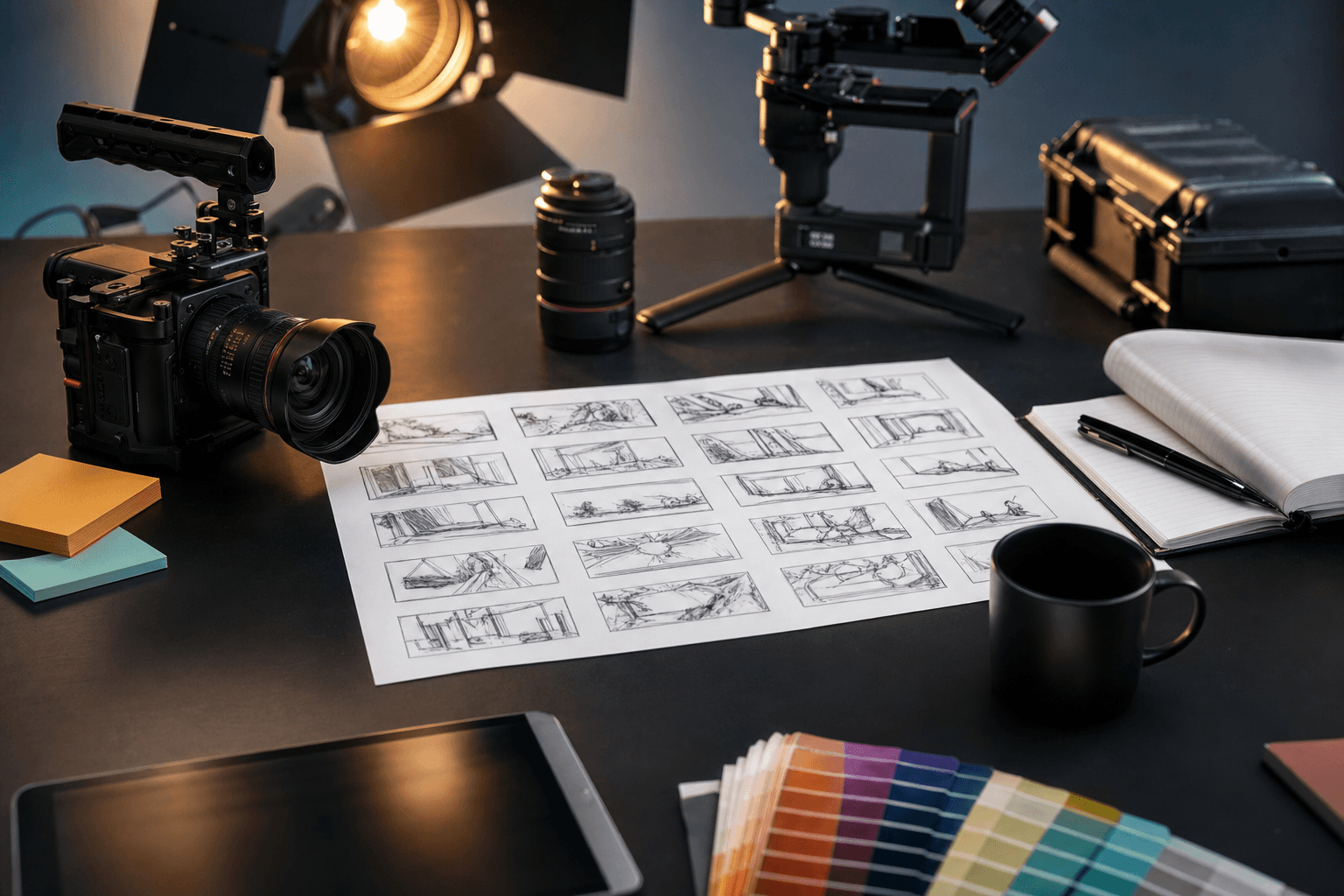
Storyboarding visualizes your script shot by shot. You don’t need artistic talent. Simple stick figures or photo references work fine. The goal is to communicate camera angles, composition, and shot sequence to your production team before anyone arrives on set.
Shot lists break down every individual shot you need to capture, organized by location and setup to maximize efficiency. A professional shot list includes shot number, description, shot type (wide/medium/close-up), camera movement, and estimated time. When Sina and the Roopol Studio team shoot food content for restaurant clients, the shot list groups all overhead shots together, all hero plate shots together, and all environmental shots together to minimize equipment changes.
Location Scouting and Toronto Permit Considerations
Location selection impacts your video’s production value significantly. Scout locations in person whenever possible, at the same time of day you plan to shoot. Pay attention to natural light direction and quality, ambient noise levels, electrical outlet locations, and practical concerns like parking and load-in access.
In Toronto and the GTA, shooting in public spaces often requires permits. The City of Toronto requires film permits for any commercial video production in parks, streets, or public property. This includes popular locations like the Distillery District, waterfront areas, Nathan Phillips Square, and High Park. Permit costs start around $200-$300 for basic shoots and increase based on location, crew size, and equipment footprint.
Processing time typically takes 5-10 business days, so factor this into your production timeline. Private property doesn’t require city permits, but you still need written location agreements from property owners.
For Toronto restaurant clients, we often recommend shooting during off-peak hours, typically 2-4 PM between lunch and dinner service. You get authentic restaurant atmosphere without disturbing paying customers, natural afternoon light through windows, and kitchen staff available for action shots without the pressure of dinner rush.
Ready to book a free consultation?
Sina and the Roopol Studio creative team help Toronto and GTA brands and restaurants create visual content that converts.
Production and Post-Production Essentials
Once pre-production planning is complete, the execution phases move quickly. Your preparation determines whether production and post-production run smoothly or turn into expensive problem-solving marathons.
Executing Your Video Shoot Day
The production day starts well before cameras roll. Call times should give crew enough setup time to test equipment, set lighting, and run through the first shot before talent arrives. A typical call sheet includes crew and talent call times with specific roles, location address with parking instructions and contact phone numbers, shot list in order of filming, equipment list and backup gear, meal break schedule, and wrap time.
Organize your shooting schedule by location and lighting setup, not by script order. Capture all scenes in one location before moving. This approach minimizes time-consuming transitions and maximizes productive shooting time. Budget extra time for the unexpected. Professional productions build 15-20% buffer time into schedules.
Editing Workflow and Review Process
Post-production begins with footage organization. Rename files with descriptive names, organize by scene or location, create a project structure that makes sense, and back up everything to at least two separate drives before touching original files.
Most professional editors work in Adobe Premiere Pro, DaVinci Resolve, or Final Cut Pro. A typical editing process follows this sequence: create a rough cut that assembles all footage in story order and establishes pacing, then move to the fine cut where you refine timing, add B-roll coverage, incorporate graphics and text overlays, and select music. The final polish phase includes color grading, audio mixing, motion graphics if required, and final export in formats optimized for your distribution platforms.
Client review cycles should be structured to prevent endless revision rounds. Roopol Studio provides clients with two revision opportunities: one after rough cut approval, and one after fine cut delivery. This structure keeps projects moving while ensuring client vision is realized.
When creating social media video content, we edit multiple aspect ratios simultaneously: 16:9 for YouTube, 1:1 for Instagram feed, and 9:16 for Stories and Reels. Planning these crops during pre-production means framing shots with safe zones so critical elements stay in frame across all formats.
How to Choose the Right Video Production Partner in Toronto
Not all video production companies approach planning and execution the same way. The right partner becomes a strategic collaborator. The wrong one delivers technically competent footage that misses your business objectives entirely.
Start by reviewing portfolios, but look beyond visual polish. Does their work show range in storytelling approaches? Do they have experience in your industry or with similar project types? A studio that specializes in corporate interviews might not be the best fit for dynamic restaurant content.
Ask specific questions during initial consultations. How do you approach pre-production planning? What’s included in your base package versus additional costs? How do you handle revisions and client feedback? Can you share a typical production timeline for a project like mine? What happens if weather or unforeseen circumstances impact the shoot?
For Toronto and GTA brands, local expertise matters. A production partner familiar with Toronto permit processes, popular filming locations, seasonal weather challenges, and local vendor networks solves problems faster and avoids rookie mistakes that cost time and money. Roopol Studio works with restaurants and brands across the GTA, bringing specific knowledge of how Toronto’s diverse neighborhoods and seasonal light patterns impact visual content.
Red flags to watch for include unwillingness to provide detailed quotes or timelines upfront, portfolios showing only one visual style or approach, pressure to commit before you’ve seen a production plan, vague answers about who will actually shoot and edit your project, and no discussion of objectives, audience, or distribution strategy.
Common Video Production Planning Mistakes to Avoid
Even experienced marketers make predictable planning mistakes that compromise results. Recognizing these patterns helps you avoid them.
Skipping the written brief. Verbal conversations and email threads don’t replace a documented video brief that captures objectives, audience, key messages, deliverables, and success metrics. Without this reference document, scope creep becomes inevitable. One e-commerce client came to Roopol Studio after their previous production partner delivered a beautiful video that showcased the wrong product line entirely because no written brief existed to reference.
Underestimating pre-production time. Clients often want to book a shoot date immediately, before location scouting, scripting, or storyboarding are complete. This approach guarantees shoot-day chaos. Professional productions spend 2-3 weeks in pre-production for every week of filming. Rushing this phase leads to forgotten props, unavailable locations, and crew members who don’t understand the creative vision.
Optimizing for the wrong platform. A video planned for YouTube performs poorly when cropped for Instagram Stories. Distribution strategy should inform creative decisions from the start, not be an afterthought during editing. A Toronto fitness studio learned this when their horizontal testimonial video lost all impact when critical text got cropped out in vertical format.
Ignoring audio quality. Viewers forgive mediocre video quality, but poor audio makes content unwatchable. Budget for proper microphones, audio monitoring during filming, and professional mixing in post. Background noise and inconsistent volume levels signal amateur production instantly. Restaurant clients particularly need to balance ambient atmosphere with clear dialogue.
Not planning for content reuse. Smart brands plan video shoots to capture assets for multiple uses. A single restaurant shoot day can produce a hero promotional video, social media cutdowns, behind-the-scenes content, and still photography. But only if you plan shot lists and schedule accordingly. One Toronto restaurant client hired a production company for a single 90-second promotional video without discussing content reuse. Three months later, they needed social media content and had to book an entirely new shoot at full cost.
Unrealistic revision expectations. Major changes requested after filming, like adding scenes that were never shot or changing the video’s entire narrative direction, require expensive reshoots. Revisions should refine the approved creative vision, not reinvent it. Clear approval checkpoints during pre-production prevent this costly mistake.
Forgetting about talent releases and music licensing. Using footage of identifiable people without signed releases creates legal risk. Similarly, popular music requires licensing fees that often exceed production budgets. Address these requirements during pre-production, not after editing is complete.
Video Production Planning Checklist
Use this checklist to ensure you’ve covered all essential planning elements before committing to a shoot date. Skipping even one item increases the risk of delays, cost overruns, or content that misses the mark.
Strategy and Objectives
- Documented video brief with clear business objectives
- Defined target audience with demographic and psychographic details
- Key messages and call-to-action identified
- Distribution platforms and content specs confirmed
- Success metrics and measurement plan established
Creative Development
- Script or topic outline completed and approved
- Storyboard created for key scenes
- Visual style and tone references gathered
- Talent casting or interview subject coordination finalized
- Music and voiceover requirements identified
- Talent releases and location agreements prepared
Production Planning
- Detailed shot list organized by location and setup
- Locations scouted and secured with written agreements
- Toronto filming permits obtained if shooting in public spaces
- Call sheet created with times, addresses, and contact information
- Equipment list finalized with backup gear identified
- Crew and talent confirmed with backup contacts available
- Weather backup plan established for outdoor shoots
- Props, wardrobe, and product samples organized
Budget and Timeline
- Complete budget covering all three production stages
- Production timeline with milestones for each stage
- Payment schedule agreed upon with production partner
- Contingency budget allocated (typically 10-15% of total)
- Final delivery date confirmed with buffer for revisions
Post-Production Preparation
- Editing style and pacing references shared
- Brand guidelines and assets provided to editor
- Review and approval process established with specific revision limits
- File format and resolution requirements for all distribution platforms
- Graphics, lower thirds, and text overlay content prepared
- Music licensing secured or royalty-free options selected
Download or adapt this checklist to your project management system. The goal is ensuring that every creative and logistical decision gets made deliberately during planning, when changes are easy, rather than during production when they’re expensive.
Frequently Asked Questions
What are the main stages of video production?
The four main stages are development (concept and initial planning), pre-production (detailed planning including scripting, storyboarding, location scouting, and scheduling), production (actual filming), and post-production (editing, color grading, audio mixing, and final delivery). Professional projects typically allocate 30-40% of time to pre-production, 15-25% to production, and 35-45% to post-production.
How long does video production take?
Timeline varies based on project complexity. A simple testimonial video might take 2-3 weeks from planning through final delivery. A multi-location brand video with actors, motion graphics, and complex editing typically requires 4-8 weeks. The pre-production phase alone usually takes 2-3 weeks for professional projects to ensure thorough planning.
How much does video production cost?
Professional video production in Toronto typically ranges from $3,000-$5,000 for basic single-camera shoots to $10,000-$25,000+ for complex multi-day productions with professional crews, actors, and advanced post-production. Costs depend on crew size, equipment requirements, shoot duration, talent fees, location expenses, and post-production complexity. Social media content packages often provide better value than one-off projects.
What should I consider before starting a video project?
Start by defining clear business objectives and measurable success criteria. Identify your target audience with specificity beyond demographics. Determine your realistic budget covering all production stages. Decide where the video will be distributed since platform requirements affect format, length, and aspect ratio. Consider your timeline with buffer time for revisions. Finally, evaluate whether you have in-house expertise or need a professional partner.
Is hiring a professional video production company worth it?
Professional production companies deliver measurable value through strategic planning that aligns content with business goals, technical expertise that ensures broadcast-quality results, efficient workflows that maximize budget, and creative direction that strengthens brand storytelling. For brand-critical content or complex projects, professional production typically delivers ROI through higher conversion rates and longer content lifespan compared to amateur productions.
Start Planning Your Video Production With Expert Support
Video production planning separates content that drives measurable results from content that drains budgets without delivering value. The framework outlined here, from defining clear objectives through structured post-production workflows, ensures your video investments support real business goals. Toronto and GTA brands working with Roopol Studio benefit from local expertise in location planning, permit navigation, and content strategies optimized for the platforms where their customers actually spend time.
Ready to turn your video concept into professionally executed content? Book a free consultation with Sina and the Roopol Studio creative team to discuss your project goals, timeline, and how strategic planning delivers video content that performs.